

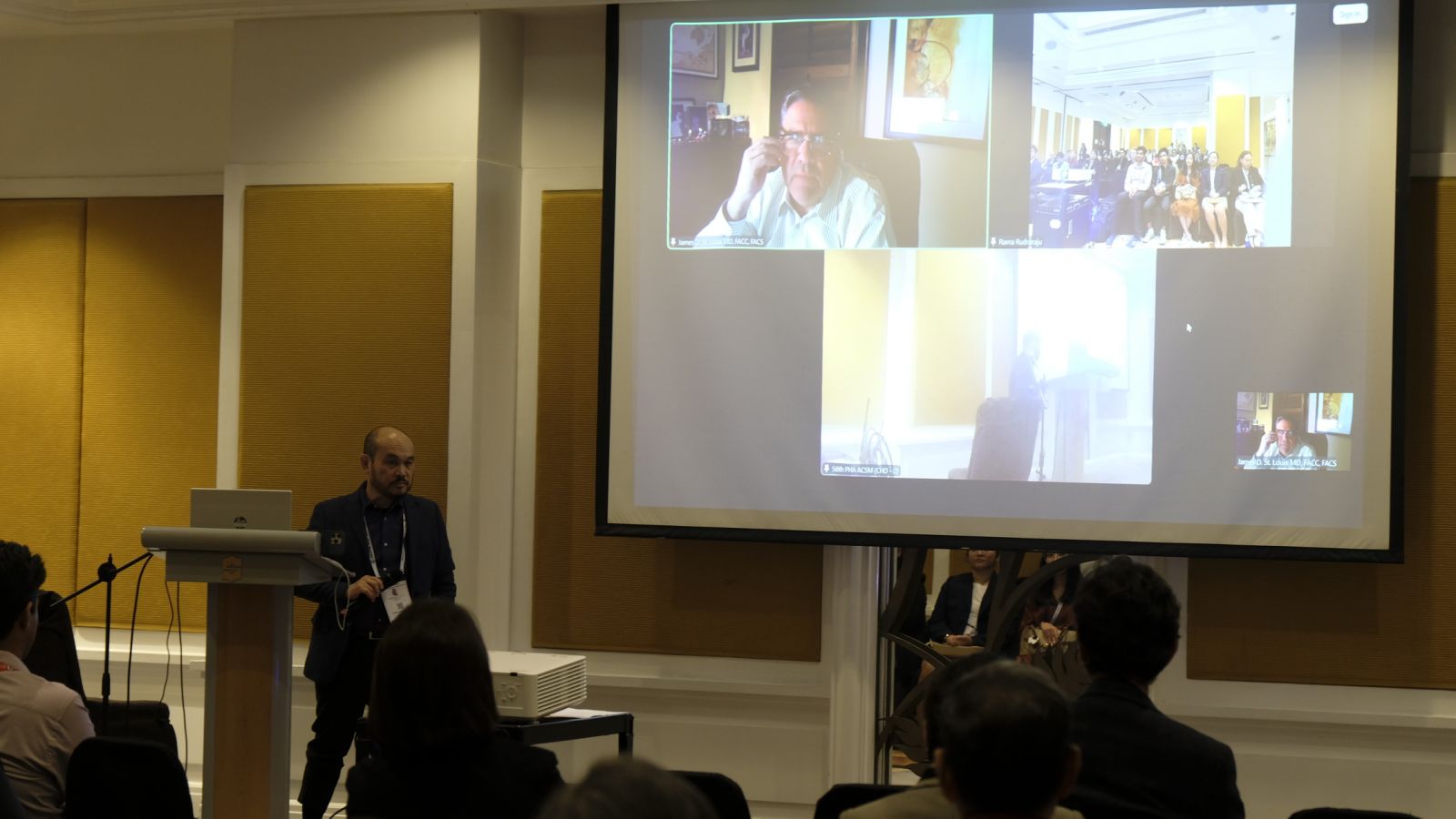
Dr. Reganion leads the CHD database session.
A national congenital heart disease database is being developed in the Philippines to help doctors track patients from diagnosis to long-term care and improve outcomes for children born with heart defects.
The initiative was tackled during the Congenital Heart Disease (CHD) session of the 56th Philippine Heart Association Convention and Scientific Meeting, under the topic “Philippine Congenital Heart Disease Database: Creating a Bridge to the World.”
United States Congenital Heart Surgeon and World’s Database Dr. James St. Louis said many countries still lack national databases that can show the real situation of patients with CHD.
He added that data is needed to understand gaps in care, guide treatment, support research, and help institutions seek stronger government and international support.
“Data is the building block necessary to build coherent models to allow us to understand what’s going on around us,” Dr. St. Louis said.
Unlike traditional registries that only record basic information, the Philippine database aims to follow patients over time. It will include details on diagnosis, birth history, hospitalizations, procedures, surgery, follow-up care, and long-term outcomes.
Dr. St. Louis said the Philippine project is important because it looks at CHD as a lifelong condition, not just a surgical case.
 “A diagnosis-based dataset with long-term outcomes is needed,” he said.
He also noted that the Philippine effort may become a model for other countries that want to build similar systems.
“The Philippine experience has set the standard for doing that,” Dr. St. Louis said.
Panelist Dr. Gisel Catalan said the database may help the country compare its outcomes with global standards and identify areas that need improvement.
“It all boils down to our patients. They are supposed to get the best quality of care,” he added.
Dr. Juan Reganion said the country already has a growing network of pediatric cardiac catheterization centers, including centers in Luzon, Visayas, and Mindanao. He said the database may help unite these centers under one system.
The project’s technical partner said that the platform is being designed to avoid duplicate patient entries and reduce data loss through automatic saving features.
The Philippine National Congenital Heart Disease Database is expected to undergo beta testing before its planned launch as a national platform.


