

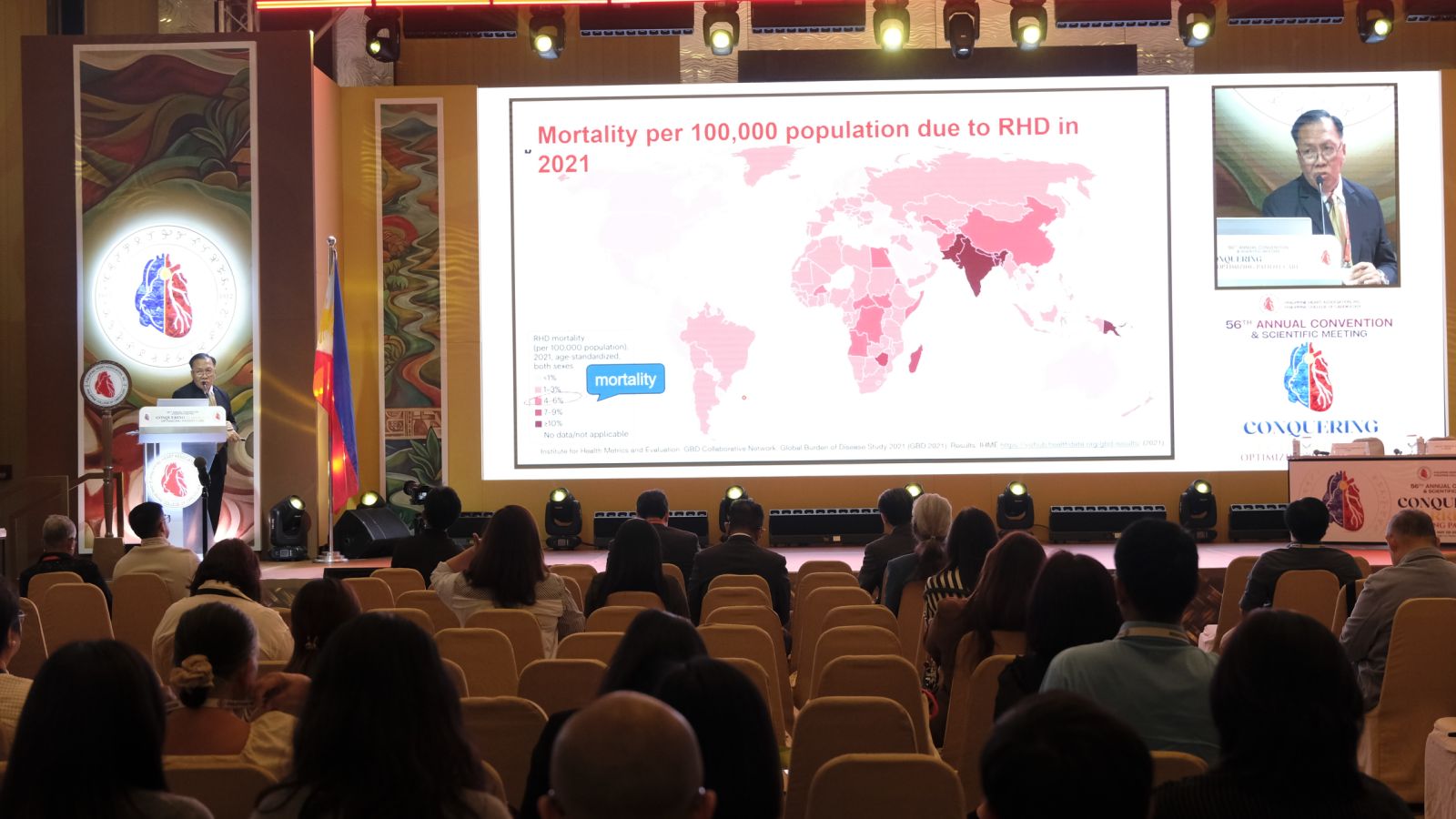
Once considered a neglected disease affecting mostly poor and underserved communities, rheumatic heart disease (RHD) is entering a new era of detection, prevention, and treatment, according to experts at the 56th Philippine Heart Association-Philippine College of Cardiology (PHA-PCC) Annual Convention and Scientific Meeting.
Delivering the Dr. Mariano M. Alimurung Memorial Lecture on “The Evolving Landscape in the Management of Rheumatic Heart Disease: Neglected Disease No More,” Dr. Joel Abanilla, PHA past president, highlighted how advances in screening technologies, preventive strategies, and public health programs are reshaping the fight against a disease that continues to affect an estimated 1.4 million Filipinos.
RHD develops from rheumatic fever (RF), a complication of untreated Group A Streptococcus infections that can lead to permanent damage of the heart valves. Although largely preventable, it remains a major cause of cardiovascular illness and death in many low- and middle-income countries.
Dr. Abanilla noted that the disease has deep roots in Philippine cardiovascular (CV) history. The Philippine Heart Center’s first open-heart surgery patient in 1975 underwent mitral valve replacement for RHD, underscoring the condition’s longstanding impact on cardiac care in the country.
Historical data presented during the lecture showed that RHD was once the leading cause of CV deaths in the Philippines, accounting for nearly half of cases and exceeding hypertension and atherosclerotic heart disease. More than 50 years later, the disease remains a significant burden, particularly among disadvantaged populations.
Globally, the World Health Organization estimated that the number of people living with RHD increased from about 40 million in 2019 to 55 million in 2021, while annual deaths rose from around 310,000 to 360,000. The burden remains concentrated in low- and middle-income countries where poverty, overcrowding, inadequate sanitation, and limited access to healthcare continue to fuel streptococcal infections.
Local registry data involving more than 3,400 Filipino patients revealed that six in 10 patients were women, many of them of reproductive age. Most patients already had advanced, multi-valvular disease at the time of diagnosis, while nearly half eventually required surgery or other valve interventions.
The registry also highlighted a major gap in prevention efforts. Among thousands of enrolled patients with established RHD only a handful were receiving recommended secondary antibiotic prophylaxis despite evidence showing that regular penicillin therapy can reduce disease progression and mortality.
“The challenge is that many patients are diagnosed late, when significant valve damage has already occurred,” Dr. Abanilla explained.
However, he said the landscape is beginning to change.
One of the most significant developments is the growing role of echocardiography in detecting RHD before symptoms appear. For years, diagnosis relied primarily on physical examination and the detection of heart murmurs, often identifying patients only after irreversible valve damage had already occurred.
“Today, echocardiography allows physicians to identify subclinical disease at much earlier stages, enabling patients to receive antibiotic prophylaxis before severe complications develop,” he said.
“The earlier we detect the disease, the greater the opportunity to prevent progression,” Dr. Abanilla added.
Beyond screening, he also emphasized the importance of strengthening secondary prevention through regular benzathine penicillin injections, which remain the standard of care for preventing recurrent RF and worsening valve damage. Government-supported programs now provide access to antibiotic prophylaxis, annual echocardiograms, laboratory tests, and follow-up care for eligible patients, he said.
Dr. Abanilla also discussed that researchers are likewise exploring new frontiers in RHD prevention. Ongoing international studies are investigating genetic factors that may make some individuals more susceptible to developing RHD after streptococcal infections, while vaccine candidates targeting Group A Streptococcus are already undergoing early-stage clinical development.
Still, experts acknowledged that medical advances alone will not eliminate the disease.
Addressing underlying social determinants—including poverty, overcrowding, sanitation, and access to primary healthcare—remains essential to reducing transmission of streptococcal infections and preventing new cases.
Dr. Abanilla said the disease continues to disproportionately affect younger populations in lower-income communities, where healthcare access is often most limited.
For Dr. Abanilla, these realities underscore both the progress made and the work that remains ahead.
From echocardiographic screening and AI-assisted detection to expanded preventive programs and promising vaccine research, RHD is no longer being overlooked by the cardiovascular community. Yet the persistence of high case numbers, delayed diagnosis, and gaps in preventive treatment show that the battle is far from over.
“The war against RHD is still with us,” Dr. Abanilla said. “But today, we have better tools, better knowledge, and better opportunities to make a difference.”
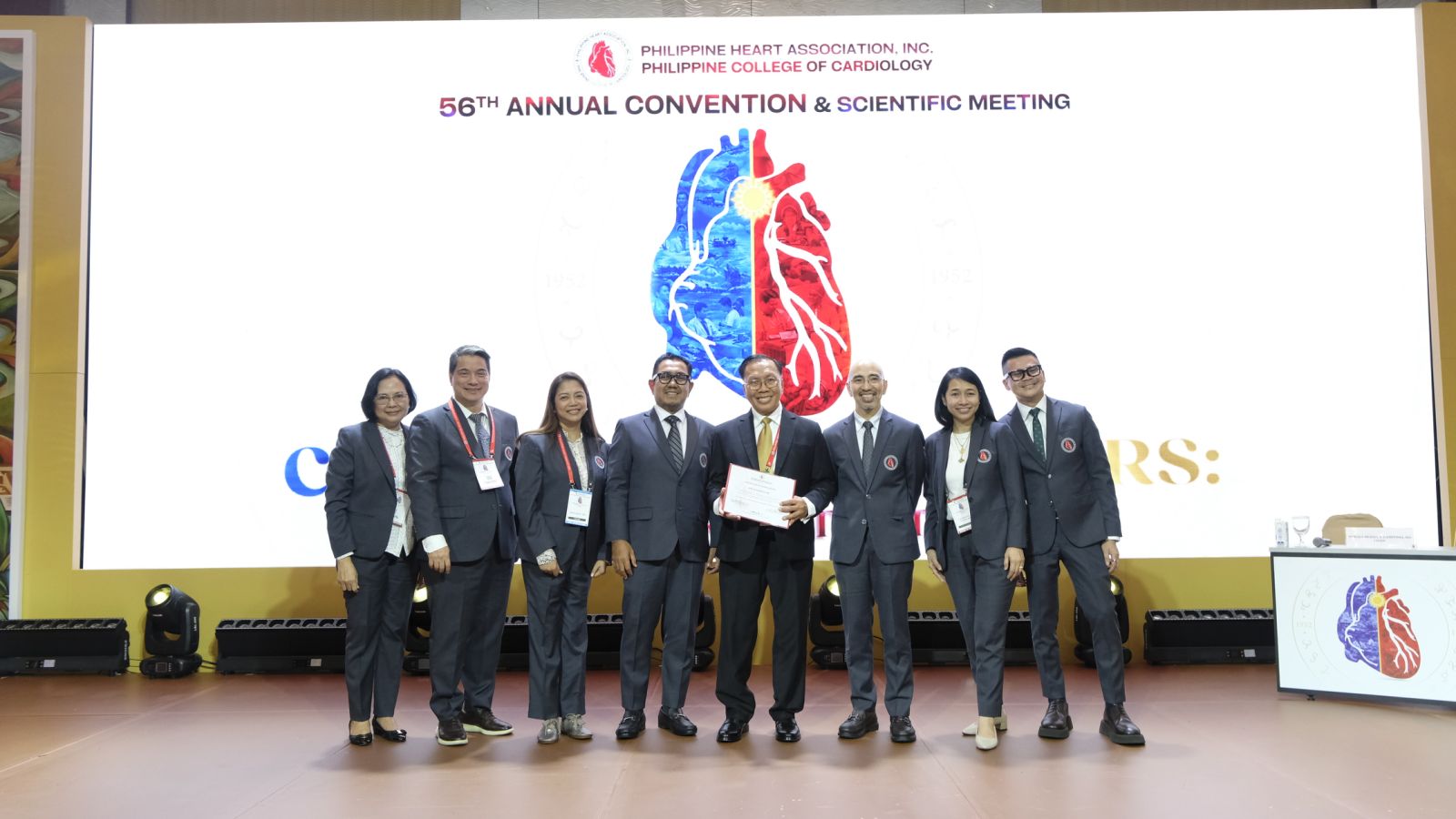
Dr. Joel Abanilla (5th fr L) PHA 56th confab Dr. Alimurung Lecturer in a huddle with PHA 2025-2026 Board, fr L: Drs. Aurora Muriel Gamponia, Richard Henry Tiongco II, Iris Garcia, Walid Amil, Rodney Jimenez, Lourdes Ella Santos and Luigi Pierre Segundo


