

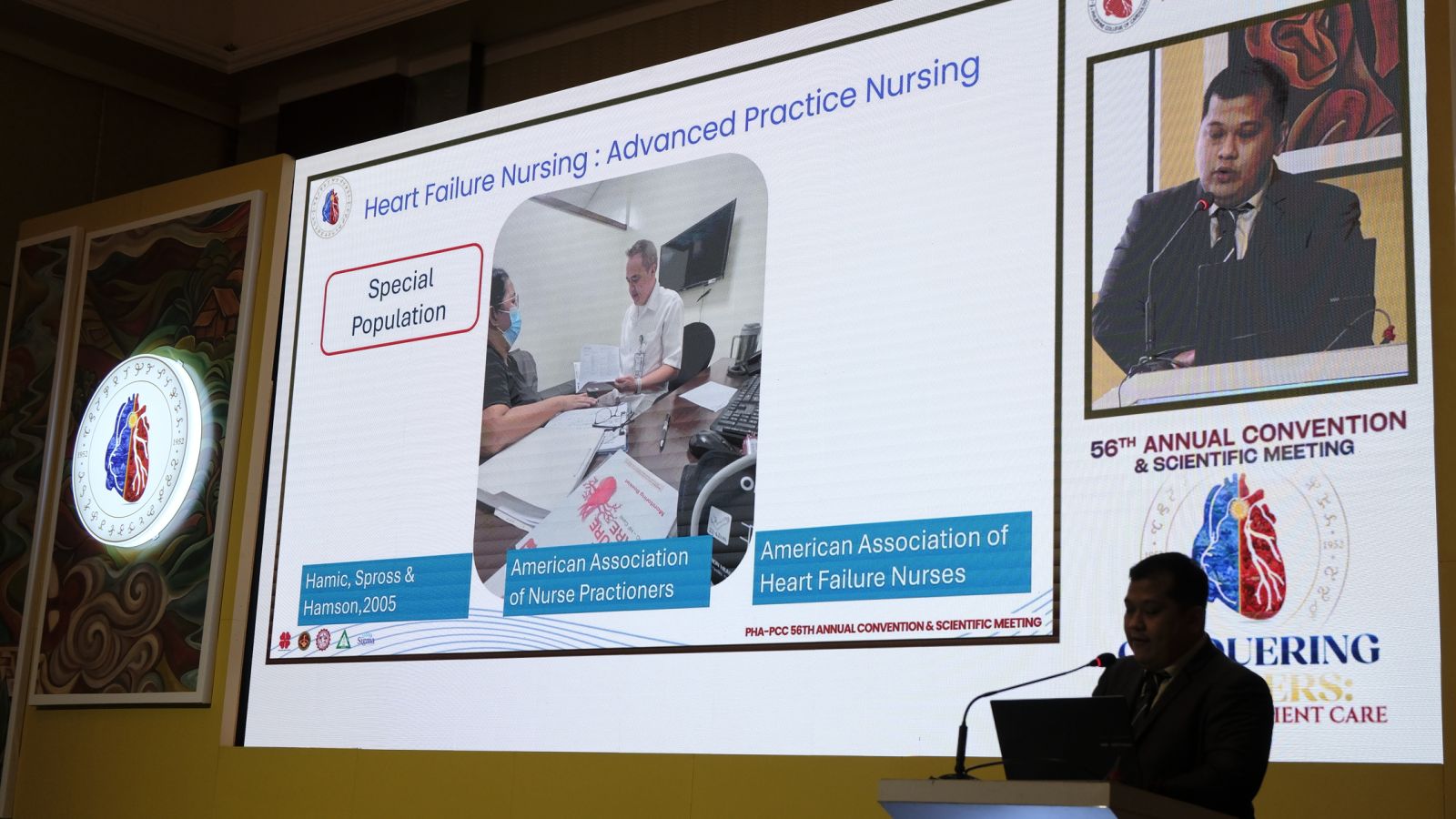
The role of nurses in heart failure (HF) has evolved, transforming it into an essential element of patient management within a critical area. This complex and multifaceted condition requires a holistic approach that goes beyond basic medical interventions.
Their responsibilities extend beyond the administration of medication, the monitoring of vital signs to include the education and emotional support provided to patients and their families.
This topic was presented by Registered Nurse Earvin Jon Abaño, who currently holds the position of Heart Transplant Coordinator at the Philippine Heart Center at the Advocacy Hour: National Heart Failure Network Program at the PHA 56th Annual Convention and Scientific Meeting on May 26, 2028
Abaño emphasized that a shortage still exists and the significance of their work and the critical role they play in the management of heart failure.
“We have a special population who are our heart failure patients. There are several colleges here in the Philippines that offer MS nursing, major in adult health nursing, and specialization in cardiovascular nursing. And unfortunately, since advanced HF is an emerging subspecialty of nursing, there is still no board of heart failure nurses,” Abaño stated.
He also underscored the need for comprehensive training for nurses to ensure they are well-equipped to match the knowledge of physicians, particularly in the administration of appropriate medications.
“So, the importance of having this kind of training is, kapag naman po nakakasabay po ‘yong mga nurses namin sa pakikipag-usap sa mga doktor. Ang hirap naman po makipag-usap na ‘yong nurse alam po ‘yong NEP, dobutamine, dopamine. So, it is a very important and critical course for nurses,” Abaño added.
Furthermore, it is crucial to have nurses certified through the Society of Cardiovascular Nurse Practitioners of the Philippines, Inc. (SCVNPPI) to enhance the comprehensiveness of their responsibilities.
“So, based po kasi sa mga nakikita ko or sa practice sa medicine, Society is the one that is certifying for a certain specialty. So, I think the SCVNPPI can also do this. Then when the heart failure nursing is now established, we can apply now for the Board of Nursing sa PRC so that it can be much more formalized and certified,” Abaño explained.
Looking ahead, the collaboration between the SCVNPPI and the PRC to formalize heart failure nursing certification is a pivotal advancement for nursing in the Philippines. This integration of specialized training within the regulatory framework aims to enhance the healthcare system by elevating care standards for heart failure patients.


