Cardiologists were reminded that the management of stable chest pain should go beyond immediate procedures and focus more on prolonged care, medical therapy, lifestyle changes, and patient-centered decision-making.
The message was highlighted during the ASEAN Federation of Cardiology (AFC) session in collaboration with the Philippine Heart Association (PHA), held as part of the PHA 56th Annual Convention at Edsa Shangri-La, Mandaluyong City on May 27, 2026.
Dr. David Quek, senior consultant at Pantai Hospital Kuala Lumpur and editor-in-chief of the AFC’s ASEAN Heart Journal, said chronic coronary disease is not always caused by major artery blockage alone.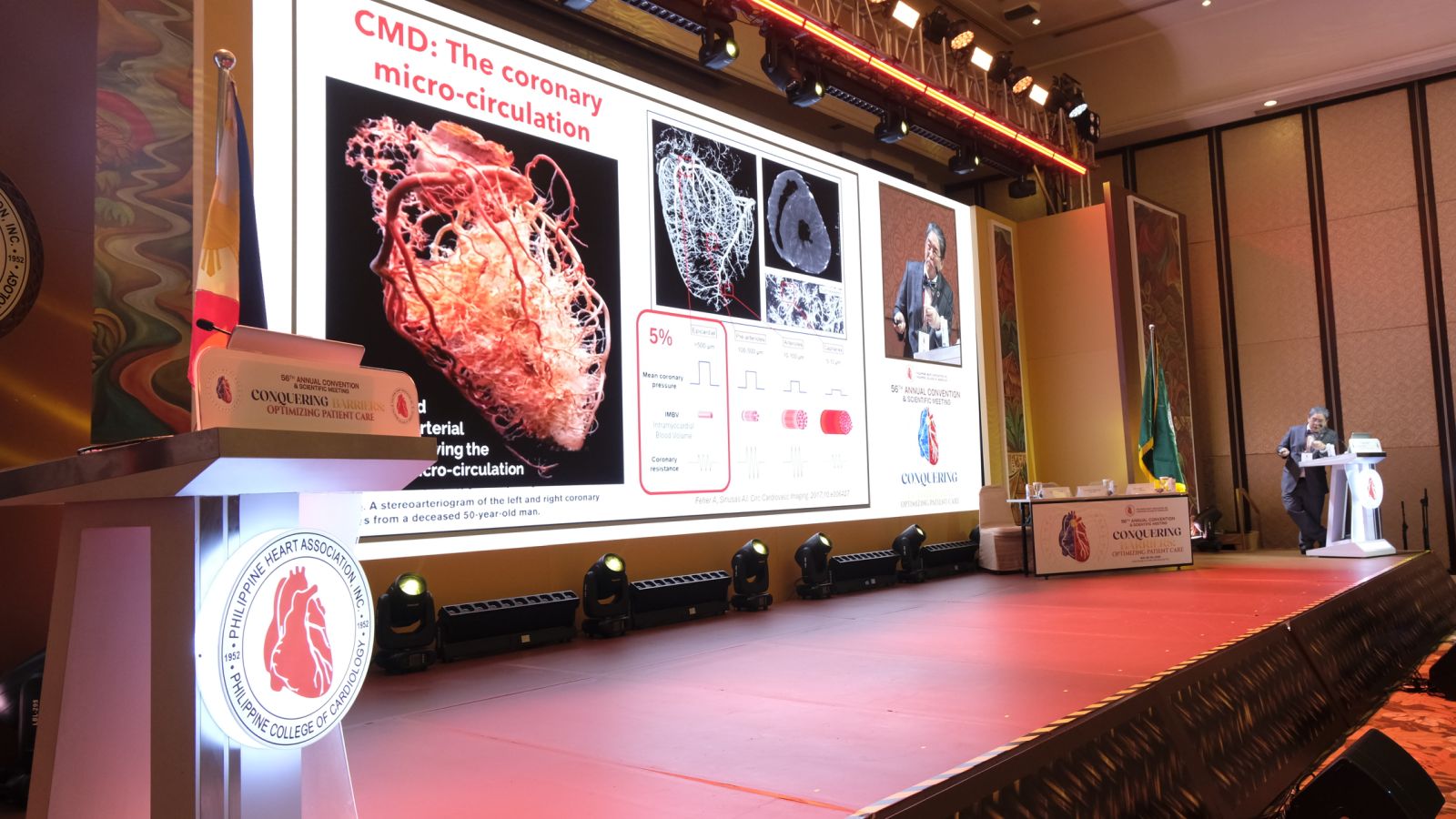
He explained that chest pain may also be caused by microvascular disease, vasospasm, inflammation, and other health conditions that may not be addressed by stenting alone.
“Not every coronary atherosclerosis lesion needs to be stented. Not all angina is the same,” Dr. Quek said.
He emphasized that doctors should consider the patient’s symptoms, risks, quality of life, and overall health before recommending any intervention, adding “It is not about the stenosis. Treat the patient,” he added.
Dr. Quek also clarified that stenting remains life-saving for acute heart attacks, but stable patients may benefit first from guideline-directed medical therapy, lifestyle modification, and careful follow-up.
“Knowing when to exercise restraint is a great power,” he said.
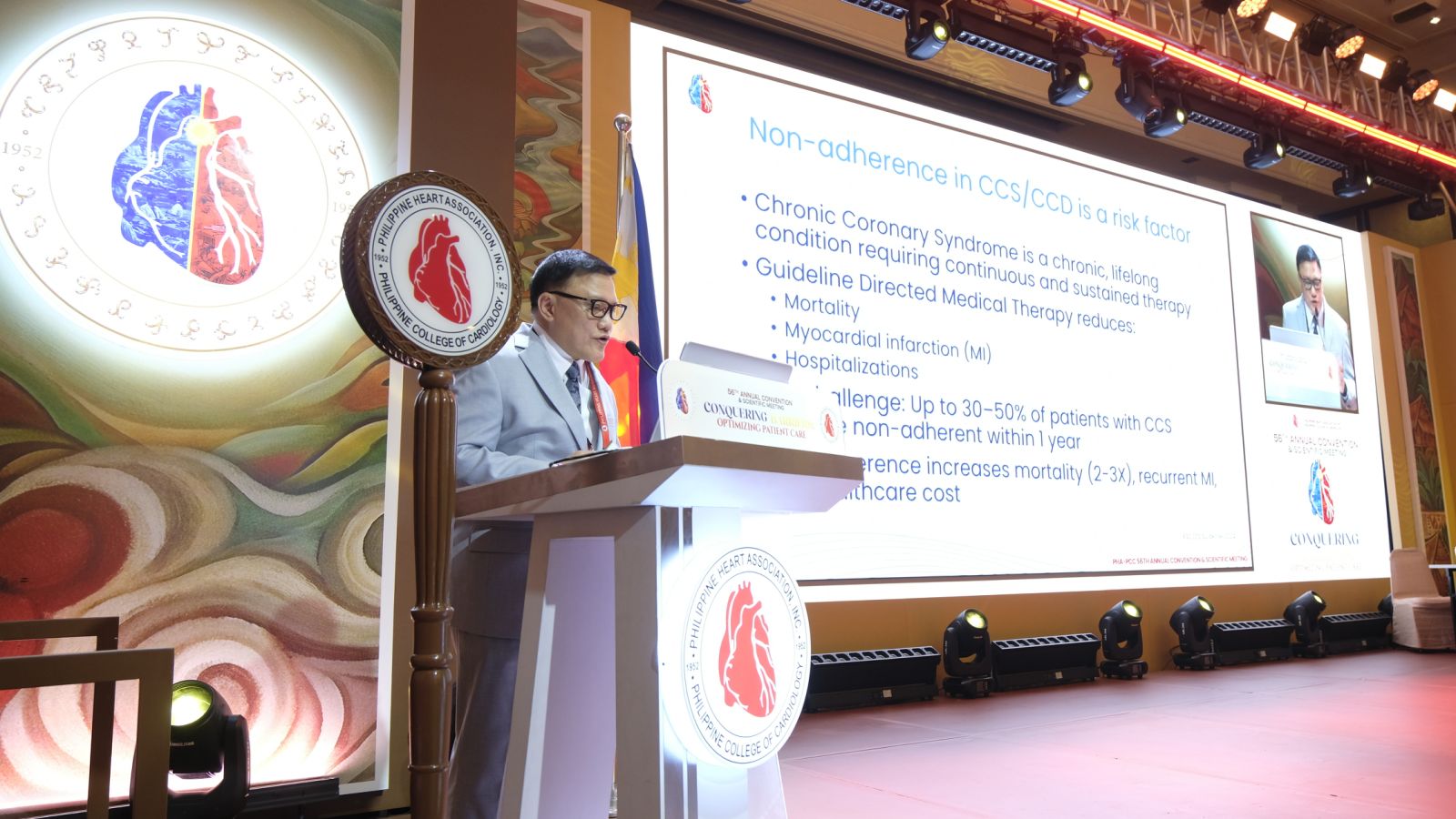
The session also featured Dr. Eugenio Reyes, who discussed “Optimizing Adherence to GDMT in Chronic Coronary Syndrome: Strategies for Real-World Success.”
Reyes underscored the importance of helping patients follow guideline-directed medical therapy, especially because chronic coronary syndrome (CCS) requires continuous and sustained treatment.
“Non-adherence in chronic (CCSs) is, I call, a risk factor. It is a predictor of death and cardiovascular events because CCS is a lifelong condition requiring continuous and sustained treatment,” Dr. Reyes said.
He said guideline-directed medical therapy has been shown to reduce mortality, myocardial infarction, and hospitalization among patients with chronic coronary syndrome.
“The key challenge is that in most medical boards, even in randomized controlled trials, about 30 to 50 percent of patients with CCS become non-adherent,” Dr. Reyes added.
He explained that non-adherence is commonly defined as less than 80 percent compliance or adherence to one or more prescribed medications.
“Therefore, we can say that non-adherence increases mortality, increases MI, and increases healthcare cost,” Dr. Reyes said.
The session highlighted that successful heart care does not only depend on choosing the right treatment, but also on helping patients understand, continue, and sustain their treatment plan in real-world settings.