

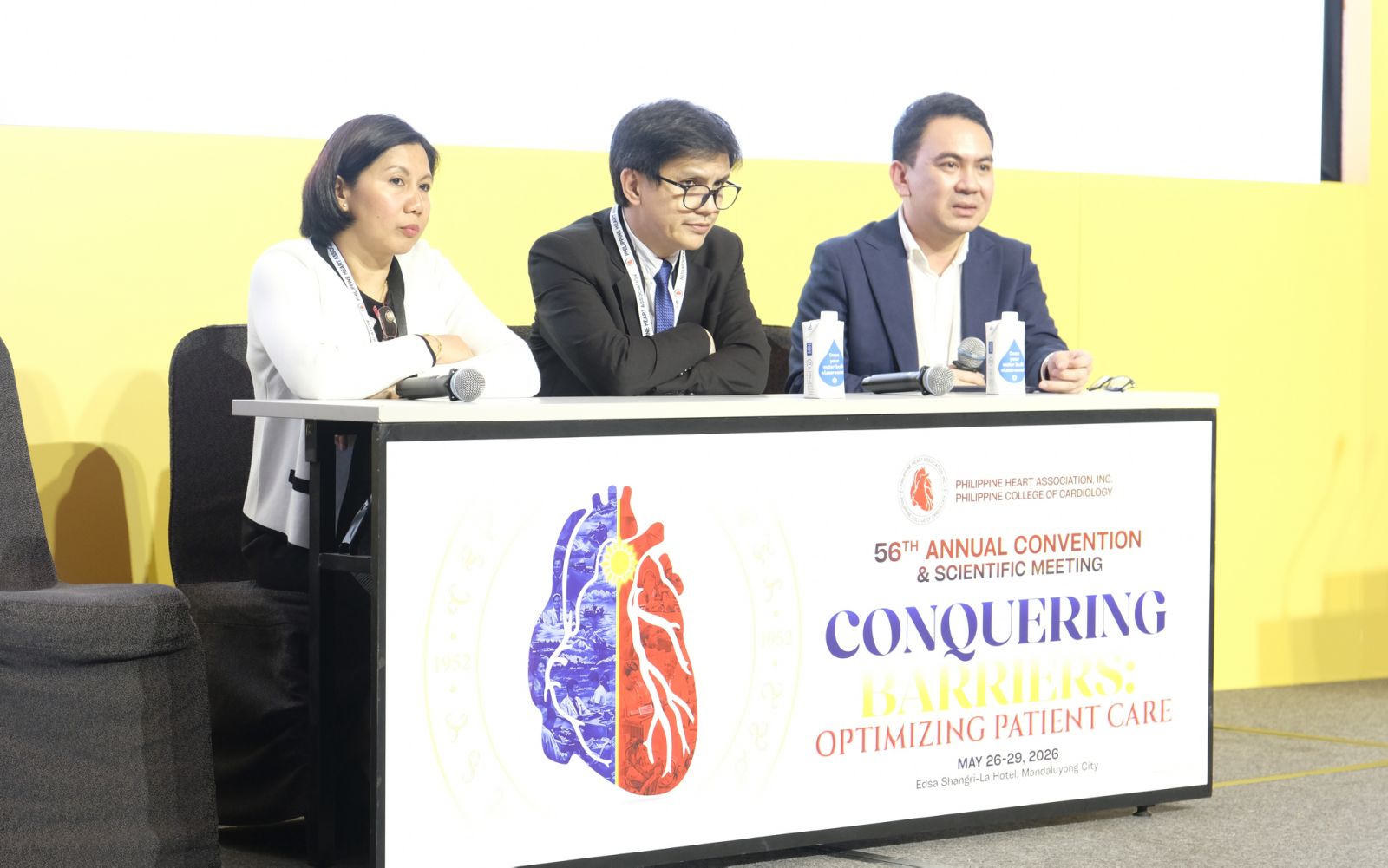
 Cardiologists discussed new international studies that may influence future treatment strategies for patients with coronary artery disease, heart attack, and atrial fibrillation during the 56th Annual Convention and Scientific Meeting on May 27, 2026.
During the Late-Breaking Clinical Trial Session, cardiologists presented recent studies involving beta blockers, antiplatelet therapy, and stroke prevention in patients with atrial fibrillation.
The session was moderated by PHA President Dr. Amil Walid and featured presentations from Dr. Anita Zabaldica of the PHA Bicol Chapter, Dr. Lowe Chiong of the PHA Zamboanga Chapter, and Dr. Mark Adorada of the PHA Western Visayas Chapter.
Dr. Zabaldica presented the SMART Decision trial, which studied whether stable heart attack patients may safely discontinue beta blocker therapy after one year.
The trial involved patients with preserved heart function and no signs of heart failure.
Results showed that stopping beta blockers in selected stable patients was non-inferior to continuing treatment in preventing death, recurrent heart attack, or hospitalization for heart failure.
Dr. Zabaldica said the findings suggest that some stable post-myocardial infarction patients may no longer need lifelong beta blocker therapy.
However, she emphasized that treatment decisions should still depend on the patient’s condition and risk profile.
“Guidelines are always available to direct us when we are confounded with many issues in managing our patient,” she said.
Meanwhile, Dr. Chiong presented the HOST-EXAM Extended trial, which compared clopidogrel and aspirin as long-term monotherapy after stent placement.
The study involved patients who completed six to 18 months of dual antiplatelet therapy after percutaneous coronary intervention.
According to Dr. Chiong, the trial showed lower cardiovascular events and lower bleeding risk among patients taking clopidogrel compared to aspirin.
“In terms of the thrombotic outcome, there is a 34% reduction, and in terms of the bleeding outcome, there is also a significant 26% reduction,” he also said.
He noted that clopidogrel may become an alternative to aspirin for long-term maintenance therapy after stent implantation.
“The only reason aspirin is used is because the patient cannot afford clopidogrel,” he said during the discussion.
Panelists also pointed out that the HOST-EXAM study was conducted among Korean patients, while another related study, STOP DAPT II, involved Japanese patients.
The discussion highlighted concerns regarding how the findings may apply to other populations, including Filipinos.
Following the presentation, the audience was asked whether they would recommend clopidogrel over aspirin as default monotherapy after stent placement.
According to moderators, 82% of respondents voted in favor of using clopidogrel.
“So medyo practice-changing itong trial na ito,” the moderator said.
The session also featured Dr. Adorada, who presented the CHAMPION-AF trial involving patients with atrial fibrillation.
The study compared left atrial appendage closure devices with oral anticoagulation in preventing stroke and cardiovascular complications.
Dr. Adorada also explained that atrial fibrillation remains a major concern because it increases the risk of stroke, hospitalization, and cardiovascular events.
The trial showed that left atrial appendage closure was non-inferior to oral anticoagulation in preventing cardiovascular death, stroke, and systemic embolism.
Researchers also observed lower bleeding risk among patients who underwent left atrial appendage closure.
Dr. Adorada said the procedure may benefit selected patients who are not suitable for long-term anticoagulation.
However, he emphasized that treatment decisions should still consider patient profile, bleeding risk, procedural risk, availability of trained operators, and cost.
“We look into the clinical profile, the risk factors, and the cost at the same time,” he said.
The said the session reflects its continuing effort to provide Filipino cardiologists with updated scientific evidence that may help improve cardiovascular care and patient outcomes.


