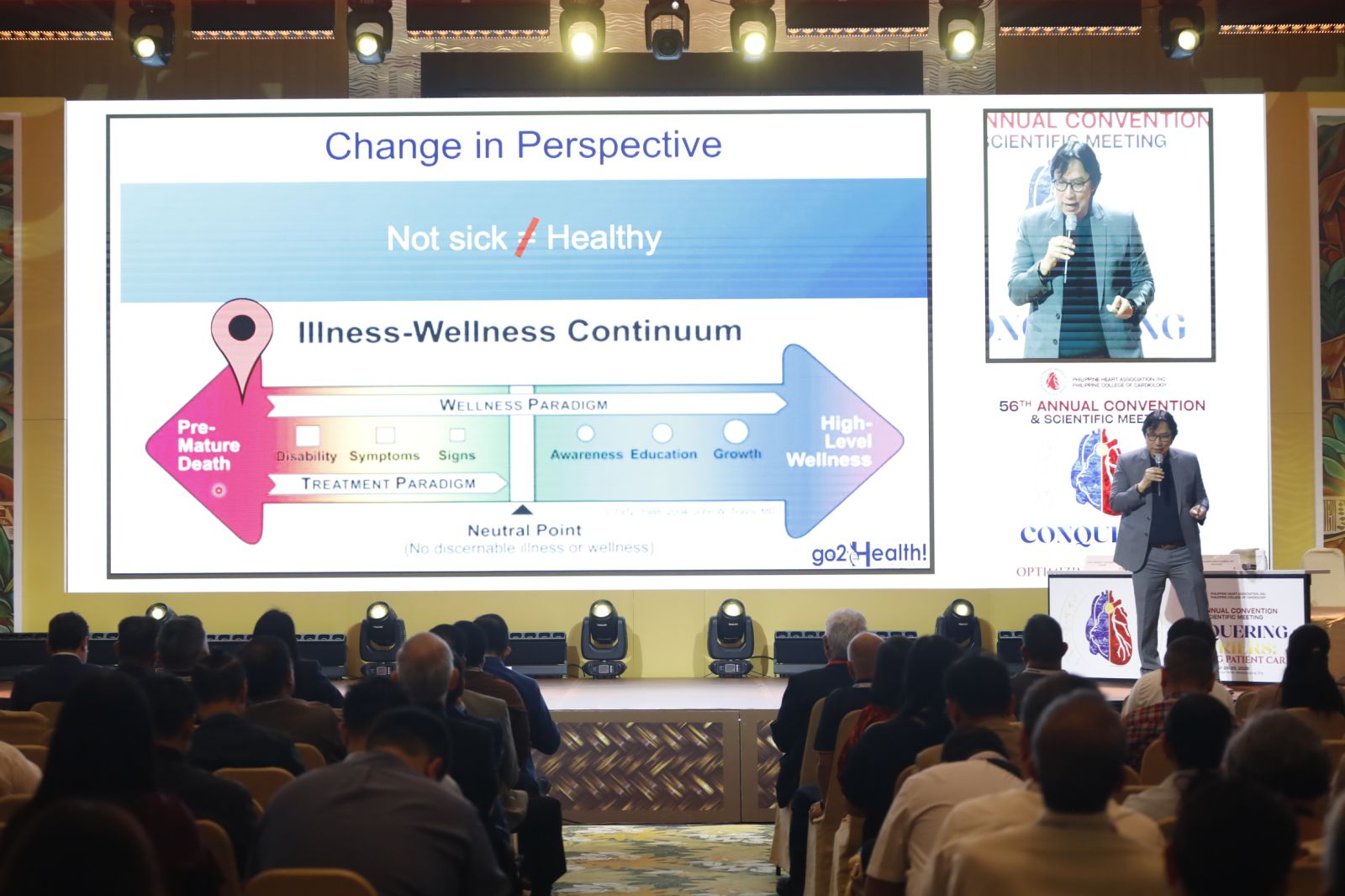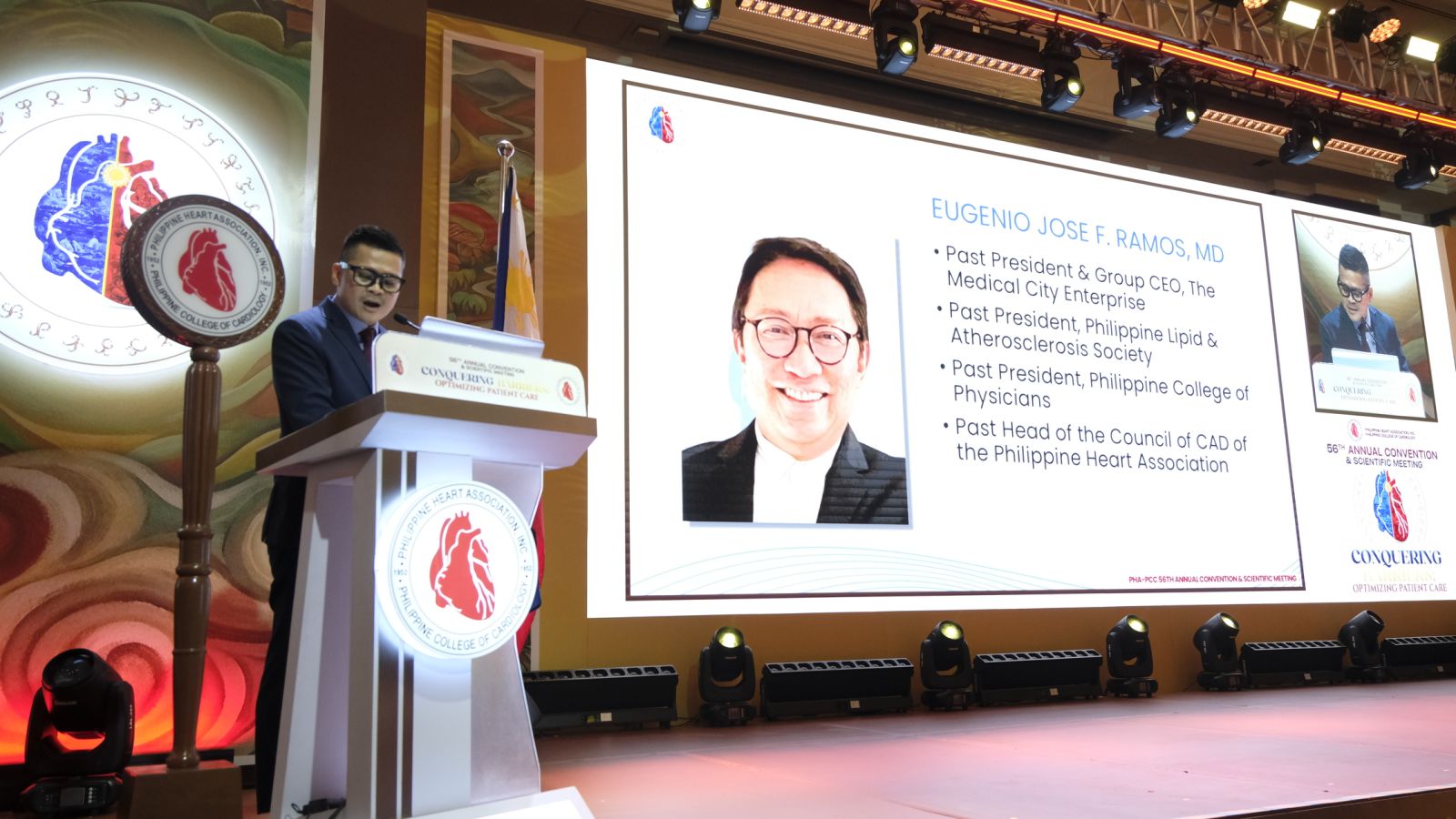
Longevity is not simply about adding more years to life, but preserving vitality, function, and purpose well into old age, according to cardiovascular expert Dr. Eugenio Ramos during the Dr. Gregorio Patacsil Memorial Lecture at the 56th Philippine Heart Association-Philippine College of Cardiology Annual Convention and Scientific Meeting.
In his lecture titled “Longevity = Energy + Purpose and Meaning,” Ramos urged physicians to rethink aging beyond disease treatment and instead focus on improving “health span”—the number of years a person remains healthy, active, and functional.
“I think longevity is really all about life,” Ramos said. “You need energy to be alive. But if you have energy and you do not know where to go, what use is it? Longevity cannot just be about the body. It has to be about the mind.”
Ramos said modern medicine has become too focused on treating diseases separately while overlooking the interconnected biological processes driving aging and chronic illness.
“One of the major problems in healthcare now is fragmentation of care because of super specialization,” he said. “We totally forget that we are dealing with just one body.”
According to Ramos, many chronic illnesses including cardiovascular disease, diabetes, obesity, depression, and cognitive decline share common underlying factors such as chronic inflammation, stress, poor metabolic health, sedentary lifestyles, unhealthy diets, sleep disruption, and environmental exposures.
“Ninety percent of chronic disease is driven by the environment and lifestyle, not just genetics,” he said.
Ramos also emphasized that aging is not only physical, but emotional and cognitive as well. While chronological age reflects the number of years a person has lived, biological age is shaped by habits, stress, lifestyle, and overall health.
“Sometimes you are young, but because you abuse yourself, you already look much older,” he said.
Beyond disease treatment
Ramos contrasted prolonged years of illness and disability with what he called “compressed morbidity,” where individuals remain active and independent until near the end of life.
“You want to live fully, remain vital, continue contributing, and then one day peacefully die in your sleep,” he said.
He also stressed that exercise remains one of the most powerful tools for healthy aging.
“There is no way you can live long without exercise,” Ramos said, encouraging regular aerobic activity, resistance training, and maintenance of muscle mass to prevent frailty and decline among older adults.
He also highlighted the role of sleep, emotional health, stress management, relationships, and nutrition in slowing biological aging and improving resilience.
“Not being sick is not equal to being healthy,” he said.
Ramos introduced the concept of “health optimization medicine,” which focuses on proactively improving physiologic function and resilience before disease develops, rather than reacting only after illness occurs.
“We should not remain reactionary slaves to the root causes of disease,” Ramos said. “We should become architects of health.”
Among his other recommendations for improving healthspan were regular physical activity, intermittent fasting, adequate protein intake for older adults, minimizing ultra-processed food consumption, maintaining healthy relationships, spending time outdoors, and prioritizing restorative sleep.
For Ramos, longevity ultimately extends beyond medicine and biology.
“It is not only about surviving longer,” he said. “It is about energy, meaning, connection, and living with purpose.”